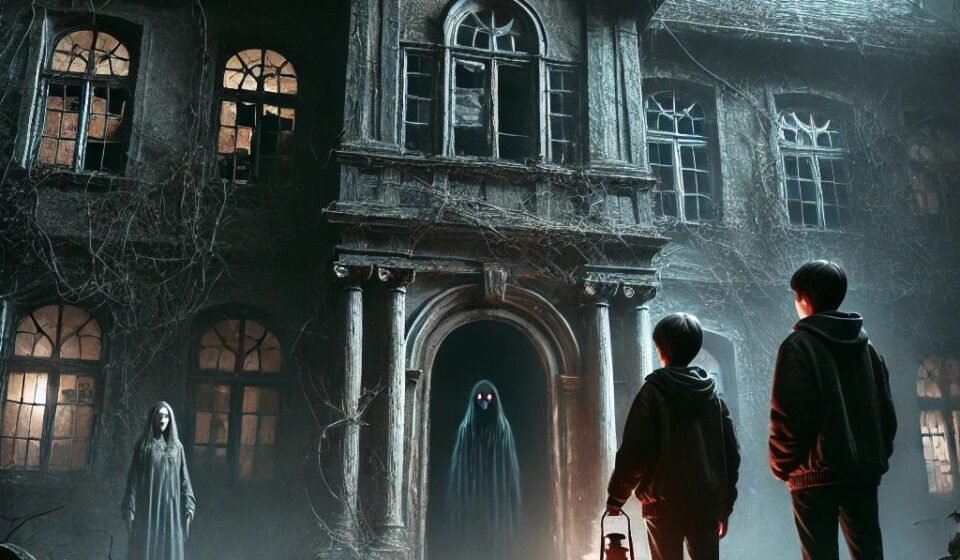

Survival horror is one of the most recognizable subgenres of horror video games. It combines frightening environments and suspense with exploration, puzzles, resource management, and the challenge of staying alive. Unlike many action games, survival horror often makes players feel vulnerable rather than powerful.
The genre has changed considerably over the years. Early survival horror games worked with limited graphics and sound, while modern titles can create detailed environments, realistic lighting, advanced sound effects, and complex stories. Despite these technological changes, many survival horror games continue to rely on the same basic idea: placing players in dangerous situations where every decision can matter.
What Is Survival Horror?
Survival horror is a type of video game that focuses on surviving dangerous or frightening situations.
Players may explore abandoned buildings, laboratories, towns, forests, underground facilities, or other mysterious locations. Along the way, they may encounter enemies, puzzles, locked areas, limited supplies, and story clues.
A major feature of survival horror is vulnerability. The player may not always have enough ammunition, health items, or other resources to deal with every threat.
This means that simply attacking everything may not be the best approach.
Instead, players may need to explore carefully, conserve supplies, solve puzzles, and decide when it is safer to avoid an enemy.
The Early Development of Horror Games
Horror elements existed in video games before survival horror became a clearly recognized genre.
Early games experimented with frightening creatures, mysterious environments, dangerous enemies, and dark stories. However, technical limitations made it difficult to create the same type of atmosphere that modern games can provide.
Developers had to use simple graphics, limited sound effects, and creative gameplay mechanics to create tension.
As gaming hardware became more capable, developers gained greater control over camera angles, environments, character animation, sound, and storytelling.
These improvements helped establish the foundations of survival horror.
The Importance of the 1990s
The 1990s were an important period for survival horror.
Three-dimensional graphics allowed developers to create environments that felt larger and more immersive.
Players could explore rooms, hallways, streets, underground areas, and other locations from different perspectives.
This created new opportunities for suspense.
A player could enter a room without knowing what might happen next. The camera might not show every part of the environment, making players rely on sound and careful movement.
The combination of exploration, limited resources, puzzles, and frightening enemies became a major part of the survival horror formula.
Fixed Camera Angles
Some classic survival horror games used fixed camera angles.
Instead of allowing the player to freely control the camera, the game placed cameras at specific locations around the environment.
This design had practical advantages because it allowed developers to control what the player could see.
It could also increase suspense.
An enemy might be outside the player’s immediate view, while unusual camera positioning could make a familiar room feel uncertain.
Fixed cameras also helped developers create cinematic compositions within technically limited environments.
The Role of Resource Management
Resource management is one of the defining features of many survival horror games.
Players may have limited supplies such as ammunition, health items, keys, batteries, or other equipment.
Because supplies are limited, players need to decide how they use them.
For example, defeating an enemy may require valuable ammunition. Avoiding that enemy could preserve supplies for a more difficult situation later.
This creates a strategic layer within the horror experience.
The player is not only asking, “How do I survive this moment?”
They may also be thinking, “Will I have enough resources for what comes next?”
Inventory Systems
Inventory management is another feature associated with survival horror.
Players may have limited space for carrying items.
This can force them to decide which objects are important and which can be left behind.
Keys, puzzle items, health supplies, weapons, ammunition, and other objects may all compete for limited inventory space.
Although this system can sometimes feel inconvenient, it can also contribute to the survival theme by making players think carefully about preparation.
Puzzles and Exploration
Survival horror games frequently use puzzles to encourage exploration.
Players may discover locked doors, unusual symbols, hidden objects, codes, or mechanisms that prevent them from immediately progressing.
Solving these puzzles usually requires players to pay attention to their surroundings.
A clue found in one room may become useful somewhere else.
This makes the environment more than just a background. It becomes part of the gameplay.
Backtracking
Backtracking is another common feature of survival horror.
A player may discover an item that cannot be used immediately or find a locked door that becomes important later.
After obtaining a new key or solving a puzzle, the player may need to return to an earlier area.
Backtracking can strengthen the feeling of familiarity with the environment.
A location that initially appeared safe may feel different when the player returns later and realizes that something has changed.
The Use of Fear and Vulnerability
Survival horror does not always need to make the player completely powerless.
Instead, it often creates a balance between the ability to defend oneself and the possibility of being overwhelmed.
A player may have a weapon but limited ammunition.
They may be able to fight an enemy but choose to avoid it because using resources could create problems later.
This balance creates difficult decisions and helps maintain tension.
Enemies in Survival Horror
Enemies play an important role in survival horror.
Different enemies can require different strategies.
Some may move slowly but be difficult to defeat. Others may move quickly or appear unexpectedly.
Certain enemies may have predictable behavior, while others may respond differently depending on the player’s actions.
Enemy design can also influence how players explore an environment.
A hallway that was previously easy to walk through may become dangerous after a new enemy begins appearing there.
Boss Battles
Many survival horror games include major encounters with powerful enemies.
These encounters can serve as important moments in the story.
Boss battles may require players to recognize attack patterns, manage resources, use environmental objects, or find specific weaknesses.
However, not every survival horror game depends on traditional boss fights.
Some games prefer to maintain tension through continuous exploration and smaller encounters.
Save Systems
Save systems have historically played an important role in survival horror.
Some older games limited where or how often players could save their progress.
This meant that players had to think carefully about when to save.
A limited saving system could increase tension because players knew that mistakes might require them to repeat part of the game.
Modern games often provide more convenient saving systems, although some developers continue to experiment with limited or location-based saving.
Sound and Silence
Sound design is especially important in survival horror.
Players may hear footsteps, doors, distant noises, machinery, environmental sounds, or enemy movements.
These sounds can provide information about what might be happening outside the player’s view.
Silence can be equally effective.
When a game suddenly becomes quiet, players may become more attentive to small sounds.
This can create anticipation without requiring a visible threat.
Lighting and Darkness
Lighting helps establish the atmosphere of survival horror games.
Dark rooms, narrow corridors, abandoned buildings, underground locations, and poorly lit outdoor areas can make exploration feel uncertain.
Flashlights are often used to give players limited visibility.
The player may be able to see only a small section of the environment at a time.
Modern graphics technology has expanded these possibilities through dynamic shadows, realistic reflections, fog, and changing light conditions.
Storytelling in Survival Horror
Survival horror games often use mystery as part of their storytelling.
The player may begin without knowing why an area has become dangerous.
As the game progresses, they can discover documents, recordings, conversations, environmental clues, and other information.
The story may gradually explain what happened and why the player character is involved.
This approach encourages players to explore because important information may be hidden throughout the environment.
Environmental Storytelling
Environmental storytelling is particularly useful in survival horror.
Instead of explaining everything through dialogue, developers can use the environment to communicate information.
An abandoned room, damaged equipment, scattered objects, photographs, signs, or written notes may provide clues about previous events.
Players can piece these details together themselves.
This makes exploration an important part of understanding the story.
Survival Horror and Psychological Horror
Survival horror and psychological horror often overlap, but they are not exactly the same.
Survival horror usually emphasizes surviving dangerous situations through exploration, resource management, puzzles, combat, or avoidance.
Psychological horror focuses more heavily on uncertainty, perception, disturbing themes, and the player’s interpretation of events.
A game can contain elements of both.
This combination allows developers to create experiences that are frightening while also giving players mysteries to consider.
The Evolution of Combat
Combat in survival horror has changed significantly.
Early games often made combat feel difficult because players had limited control, limited ammunition, or limited defensive options.
Later games introduced smoother controls and more advanced combat systems.
However, many survival horror developers deliberately avoid making players too powerful.
If players can easily defeat every enemy, the feeling of vulnerability may become weaker.
For this reason, resource limitations and enemy design remain important even when modern games provide advanced combat mechanics.
Modern Survival Horror
Modern survival horror games have expanded the genre in many directions.
Some focus on realistic environments and first-person perspectives.
Others use third-person cameras, cinematic storytelling, open environments, or more advanced combat.
Modern games can also use detailed character animation and facial expressions to make stories more emotionally engaging.
Despite these developments, many modern titles continue to use exploration, limited resources, puzzles, environmental storytelling, and suspense.
First-Person Survival Horror
First-person survival horror places the player directly into the character’s viewpoint.
This can make exploration feel immediate.
Players cannot see their character from behind, so the environment can feel closer and more personal.
First-person games can also use the limited field of view to create uncertainty.
A player may hear something nearby without immediately seeing where it came from.
Third-Person Survival Horror
Third-person survival horror shows the character from an external camera.
This perspective allows players to see more of the character and surrounding environment.
It can also make movement and combat easier to observe.
Third-person survival horror has remained popular because it combines cinematic presentation with exploration and combat.
Remakes and the Return of Classic Survival Horror
Remakes have played an important role in the modern survival horror genre.
Older games can be rebuilt using modern graphics, sound, controls, and technology.
This allows developers to preserve familiar stories and locations while creating experiences that are accessible to modern audiences.
Remakes can also introduce redesigned environments, updated mechanics, and new ways of presenting familiar events.
Multiplayer Survival Horror
Although survival horror traditionally focuses on single-player experiences, multiplayer games have introduced new possibilities.
Players can work together to explore dangerous environments, complete objectives, manage resources, and escape threats.
Cooperative gameplay can change the atmosphere because players can communicate with one another.
At the same time, multiplayer survival horror can introduce unexpected situations caused by human players.
Streaming and Survival Horror
Streaming platforms have helped increase interest in horror games.
Viewers can watch players explore unfamiliar environments, solve puzzles, react to surprises, and make decisions under pressure.
Survival horror can work particularly well for this type of content because the player’s reactions become part of the viewing experience.
This has also introduced some horror games to audiences who might not normally purchase or play them.
Why Survival Horror Remains Popular
Survival horror continues to attract players because it combines several different types of gameplay.
Players can explore environments, solve puzzles, manage resources, discover stories, and deal with dangerous situations.
The genre also provides variety.
Some games focus heavily on action, while others emphasize stealth, mystery, psychological tension, or exploration.
This flexibility allows developers to create different interpretations of survival horror while maintaining the central idea of surviving an uncertain and dangerous environment.
The Future of Survival Horror
The future of survival horror will likely continue to be influenced by improvements in gaming technology.
More advanced graphics can make environments increasingly detailed.
Improved audio technology can create more realistic and dynamic sound.
Artificial intelligence can allow enemies to react more naturally to player behavior.
Virtual reality can provide even more immersive environments.
Developers can also experiment with procedural generation, interactive storytelling, player choices, and new approaches to resource management.
Survival horror has developed from relatively simple horror experiences into a broad genre combining exploration, puzzles, resource management, storytelling, combat, stealth, and psychological tension. While technology has changed how these games look and sound, the central idea remains similar: placing players in an uncertain environment and challenging them to survive while discovering what is happening around them.