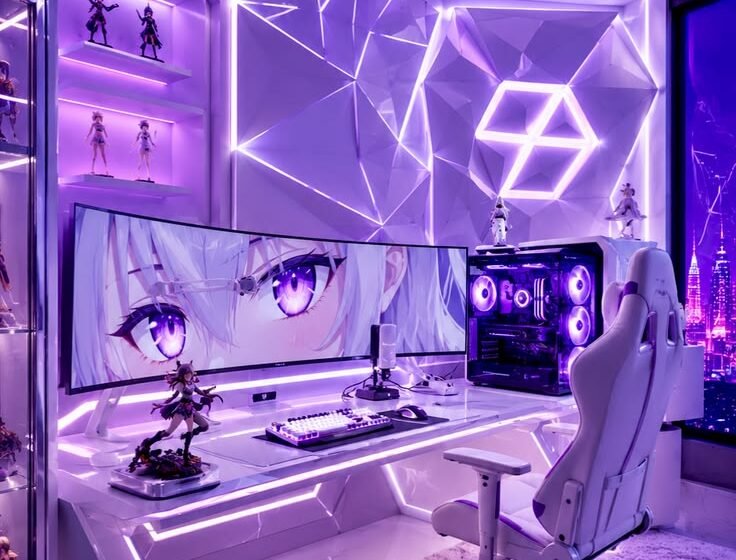

Video games can offer very different experiences depending on how they are designed. Some games are built mainly for one person, while others are designed around playing with or against other people.
This creates two major categories that many players are familiar with: single-player and multiplayer games.
Single-player games focus primarily on an individual player’s experience. Multiplayer games allow two or more players to participate in the same gaming experience, either locally or through an internet connection.
Neither approach is exactly the same because developers can combine different features. Some games offer both single-player and multiplayer modes, while others focus almost entirely on one type of experience.
Understanding the differences can help players choose games that match the kind of experience they want.
What Is a Single-Player Game?
A single-player game is designed primarily for one person to play at a time.
The player controls the main character or other elements of the game while computer-controlled characters and systems provide the challenges.
These games can include stories, missions, puzzles, exploration, combat, strategy, simulation, and many other types of gameplay.
A single-player game does not necessarily mean the game has no connection to the internet. A game can still require an internet connection for certain features while primarily offering a single-player experience.
The defining feature is that the main gameplay is designed around one player.
What Is a Multiplayer Game?
A multiplayer game allows multiple players to participate in the same gaming experience.
Players might cooperate with each other, compete against each other, or take part in a larger shared environment.
Multiplayer games can be played locally, with players using the same device or connected devices, or online, with players connecting through the internet.
Modern multiplayer games can bring together players from different cities and countries.
Some games may have only a small number of players in a match, while others can support large online communities.
How Single-Player Games Work
In a single-player game, the developer controls the behavior of most characters and systems that interact with the player.
Computer-controlled characters may act as enemies, allies, teammates, merchants, or other characters.
The game can be designed around a carefully planned sequence of events.
For example, a story-driven adventure game might introduce a character, present a problem, guide the player through several missions, and gradually reveal more of the story.
Because the experience focuses on one player, developers can carefully control the pace and progression.
Storytelling in Single-Player Games
Storytelling is often an important part of single-player games.
Developers can create characters, dialogue, environments, missions, and events specifically for an individual player.
The player can experience the story at their own pace.
Some games offer branching decisions that can change certain events or outcomes.
Others provide a more linear story where players progress through a planned sequence.
This makes single-player games particularly suitable for experiences that focus heavily on narrative and exploration.
The Role of Artificial Intelligence
Computer-controlled characters are extremely important in many single-player games.
Artificial intelligence systems can control enemies, teammates, animals, civilians, and other characters.
These characters can react to what the player does.
For example, an enemy might search for the player after noticing them, while an ally might follow the player and help during a mission.
The quality of these systems can strongly affect how believable and challenging a single-player game feels.
What Makes Multiplayer Different?
Multiplayer games introduce human players into the experience.
Instead of every opponent or teammate being controlled by the computer, real people can control their own characters.
This creates an unpredictable element.
A human player may behave differently from what a developer expected.
They might use an unusual strategy, cooperate with teammates, take risks, or make unexpected decisions.
This unpredictability is one of the major characteristics of multiplayer gaming.
Local Multiplayer
Multiplayer gaming existed before widespread internet access.
Local multiplayer allows multiple people to play together using the same console, computer, or connected devices.
Some games use split-screen displays so each player can see their own section of the game.
Others allow players to share the same screen.
Local multiplayer can create a social experience because players are physically present in the same location.
Online Multiplayer
Online multiplayer allows players to connect through the internet.
Players can compete or cooperate with people who may be thousands of kilometers away.
Online gaming has become one of the most important developments in the video game industry.
It allows games to support competitive matches, cooperative missions, persistent worlds, social communities, and many other experiences.
Cooperative Multiplayer
Cooperative, often called co-op, gaming focuses on players working together.
Players may need to complete missions, defeat enemies, solve puzzles, build structures, or survive challenges as a team.
Co-op games can encourage communication and teamwork.
Different players may also have different roles.
For example, one player might focus on attacking while another supports the team.
Competitive Multiplayer
Competitive multiplayer places players or teams against one another.
Players may compete to score the most points, complete an objective, defeat opponents, or achieve another goal.
Competitive games often include ranking systems, leaderboards, tournaments, or organized competitions.
Some have developed large esports communities.
Multiplayer Battle Royale Games
Battle royale games are another example of multiplayer gaming.
Players enter a large competitive environment and attempt to survive while facing other players.
The number of players can vary depending on the game.
These games combine elements of exploration, resource management, combat, strategy, and survival.
The unpredictable behavior of human opponents can make every match different.
Massive Online Worlds
Some multiplayer games create large persistent worlds where players can interact over long periods.
Massively multiplayer online games can contain large communities and many different activities.
Players may create characters, complete quests, join groups, trade items, explore environments, and participate in events.
These games can continue to receive new content long after their initial release.
The Social Side of Multiplayer Gaming
Multiplayer gaming is not only about competition.
It can also provide social experiences.
Players can meet friends, communicate through voice or text, form teams, and participate in online communities.
For some players, the social relationships surrounding a game become an important part of why they continue playing.
However, online communities can also have disagreements and negative interactions, which is why many games provide reporting, blocking, and moderation tools.
Advantages of Single-Player Games
Single-player games offer several features that appeal to different types of players.
One major advantage is control over the pace.
Players can often pause the game, explore at their own speed, and continue when they are ready.
They also do not need to coordinate their schedule with other players.
Single-player games can also provide carefully designed stories and experiences that do not depend on the actions of other human players.
Advantages of Multiplayer Games
Multiplayer games offer a different set of experiences.
Playing with other people can create moments that are difficult to reproduce with computer-controlled characters.
Friends can cooperate on challenges, compete against one another, and share memorable experiences.
Multiplayer games can also provide long-term competition because players can continue improving their skills against other human opponents.
The Challenge of Multiplayer Connections
Online multiplayer games depend heavily on network connections.
A poor connection can cause delays, commonly known as latency or lag.
When a player’s actions take longer to reach the game server, the experience can become frustrating.
Developers therefore spend significant effort improving network systems and server performance.
Players also need a reasonably stable internet connection for many online games.
Game Servers
Online multiplayer games often rely on servers to connect players and manage information.
Servers can handle player locations, game states, matchmaking, communication, and other important functions.
The exact technology varies between games.
Large multiplayer games may require significant infrastructure to support large numbers of players.
Matchmaking
Many online games use matchmaking systems to find other players for a match.
The system may consider factors such as game mode, region, connection quality, or player skill.
The goal is generally to create playable matches without making players wait too long.
Different games use different matchmaking approaches.
Can a Game Be Both Single-Player and Multiplayer?
Yes.
Many modern games offer both modes.
A player might be able to complete a story campaign alone and then enter an online multiplayer mode.
Some games also allow players to switch between solo and cooperative experiences.
This approach gives players more flexibility.
It also allows developers to appeal to people who prefer different styles of gaming.
Single-Player and Multiplayer Are Not Opposites
It is easy to think of single-player and multiplayer as completely separate categories, but modern games often combine elements of both.
A game might include a single-player campaign, online multiplayer, cooperative missions, competitive modes, and social features.
This means the difference is not always about the type of game itself.
It is more about how players interact with the game and with other people.
Which Type Is More Suitable for You?
The answer depends on what kind of experience you enjoy.
Someone who enjoys stories, exploration, and playing at their own pace may prefer single-player games.
Someone who enjoys competition, teamwork, and social interaction may prefer multiplayer games.
Other players may enjoy both.
There is no requirement to choose only one style.
Gaming offers enough variety for players to move between different experiences depending on their mood and interests.
How Both Styles Have Influenced Gaming
Single-player and multiplayer gaming have both contributed significantly to the development of video games.
Single-player games have helped developers create detailed stories, characters, worlds, and carefully designed experiences.
Multiplayer games have demonstrated how games can connect people across different locations and create long-lasting communities.
As technology continues to develop, the line between the two experiences may become even less distinct.
The Future of Single-Player and Multiplayer Gaming
Future games are likely to continue combining different ways of playing.
Improved internet infrastructure, cloud technology, artificial intelligence, and increasingly powerful hardware could create new possibilities.
Single-player games may use more sophisticated computer-controlled characters and dynamic worlds.
Multiplayer games may support larger communities, more complex social systems, and more connected experiences.
Some games may also allow players to move seamlessly between solo and multiplayer modes.
Different Experiences for Different Players
Single-player and multiplayer games provide different ways to enjoy interactive entertainment.
Single-player gaming focuses on an individual’s journey through a designed experience, while multiplayer gaming introduces other human players into the experience.
Both can offer exploration, competition, storytelling, creativity, strategy, and entertainment.